The Magic and Science of the Aurora Borealis: Why Iceland is the World’s Best Stage
2026-02-22
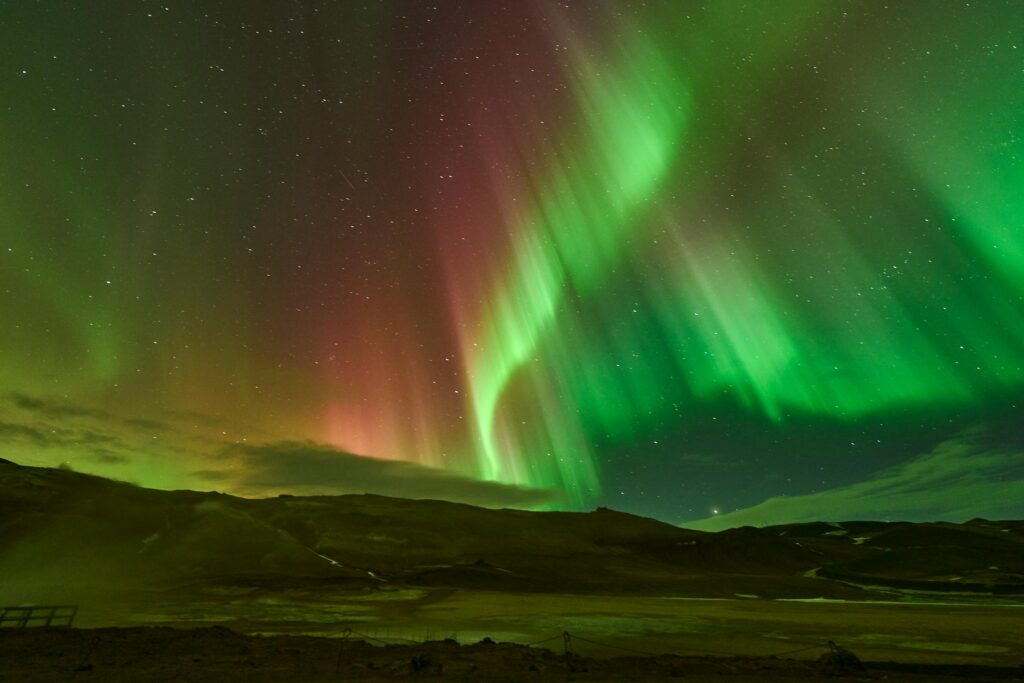
Imagine standing out in the crisp Icelandic winter night. The air is cold, the sky is incredibly dark, and the silence is profound. Suddenly, a faint ribbon of pale light appears overhead. It begins to move, twist, and brighten, exploding into dancing curtains of vibrant green, and sometimes pink or violet, stretching across the horizon.
Witnessing the Aurora Borealis—the Northern Lights—is a humbling, almost spiritual experience. It feels like pure magic.
But this spectacular show isn’t just folklore or magic; it’s a fascinating cosmic interaction on a massive scale. At IceXcursions, we believe that understanding how the lights form makes seeing them even more powerful.
In this article, we’ll break down the science of the Aurora in simple terms and explain why Iceland is arguably the best place on Earth to witness this celestial phenomenon.
What Actually IS the Aurora Borealis? (A Simple Explanation)
You don’t need a degree in astrophysics to understand the Northern Lights. Think of it as a cosmic conversation between the Sun and the Earth.
The Sun’s “Breath”
Our Sun is incredibly active. It constantly sends streams of charged particles (electrons and protons) out into the solar system. This is called the “solar wind.” Sometimes, giant eruptions on the Sun send massive bursts of these particles hurtling toward Earth.
Earth’s Magnetic Shield
Thankfully, Earth has a protective magnetic field that surrounds the planet. This field acts like a giant shield, deflecting most of that solar wind around us, protecting life here on the surface.
However, our magnetic field is weaker at the North and South poles. Instead of deflecting the particles there, the field funnels them down into our atmosphere near the polar regions.
The Neon Sign Effect
Here is where the magic happens. When these supercharged solar particles slam into gases in our upper atmosphere (like oxygen and nitrogen), they transfer energy to them. To release that extra energy, the atmosphere’s gases glow.
It’s the exact same principle behind a neon sign: electricity excites gas in a tube, making it light up. The Aurora Borealis is essentially nature’s greatest neon light show, happening over 100 kilometers above your head.
- Why Green? Green is the most common color because it’s produced by oxygen atoms at lower altitudes.
- Why Pink or Purple? These colors are usually caused by nitrogen, or very intense solar activity hitting higher-altitude oxygen.
Why is Iceland the Perfect “Hunting Ground” for the Aurora?
Now that you know how they form, why should you travel to Iceland to see them? Why not just anywhere in the north? Iceland offers a unique combination of factors that maximize your chances.
1. Location: The Auroral Oval
The Northern Lights don’t just happen anywhere in the north. They occur most frequently in a ring-shaped zone centered on the magnetic north pole, known as the “Auroral Oval.”
Iceland sits smack in the middle of this prime activity zone. While you might see lights occasionally farther south during extreme solar storms, in Iceland, they are a regular occurrence all winter long.
2. Dark Skies and Untouched Wilderness
To see the lights clearly, you need darkness. Light pollution from cities washes out the aurora, making it invisible.
While Reykjavik is a vibrant capital, Iceland’s immense, sparsely populated wilderness means true darkness is never far away. A short drive out of the city takes you into vast lava fields and black sand deserts where the only light comes from the stars and the aurora itself.
3. The Long Winter Nights
You can’t see the aurora during the day (the sun is too bright). You need dark nights. Iceland’s high latitude means that from late August to mid-April, the nights are long and dark, providing a massive window of opportunity to catch the show.
The Reality Check: You Can’t Just “Turn It On”
If the Northern Lights are so common in Iceland, are you guaranteed to see them?
This is where we have to be honest experts: No. There is never a 100% guarantee. The Aurora Borealis is a natural phenomenon, and nature is unpredictable.
To see the lights, three things must align perfectly:
- Solar Activity: The sun needs to have sent enough charged particles our way (often measured by the “Kp-index”).
- Darkness: You need a clear, dark night between September and April.
- The Weather (The Biggest Challenge): This is the crucial factor in Iceland. You could have the most intense solar storm in history, but if heavy clouds are covering the sky, you won’t see a thing. Iceland’s weather is notoriously changeable.
Why You Need an Expert Guide to See the Lights
Because the weather is the biggest variable, chasing the Northern Lights on your own can be frustrating and difficult. You might end up driving on unfamiliar, icy winter roads in pitch darkness, staring at a cloudy sky while the aurora is dancing just 50 kilometers away in a clear patch.
This is why booking a tour is highly recommended.
At IceXcursions, we partner with the most experienced local operators in Iceland. Here is the advantage of going with experts:
- They Chase Clear Skies: Professional guides spend hours analyzing satellite cloud cover maps before the tour even starts. They know local microclimates and where “holes” in the cloud cover are most likely to appear.
- Safety First: Icelandic winter driving requires skill and the right vehicles. Our partners use specialized Super Jeeps or comfortable buses designed for winter conditions, so you can relax instead of white-knuckling the steering wheel.
- The Network: Guides talk to each other. If one guide spots the lights in one location, they alert the others.
You don’t just want to hope to see the lights, you want to maximize your chances.
>>> Browse Our Curated Selection of Northern Lights Tours Here<<<